
Introduction: A Major Shift in IT Management Is Underway
In 2025, businesses are rethinking how their IT infrastructure is managed. For more than two decades, traditional Managed Service Providers (MSPs) were the default choice for handling servers, security, backups, and day-to-day IT operations. But today, that model is quietly being replaced.
The reason is simple: the way companies operate has changed, but MSPs have not evolved fast enough to keep up.

Remote teams, AI-driven workflows, stricter compliance requirements, rising cloud costs, and growing security risks have exposed the limitations of the traditional MSP model. Businesses no longer want reactive support, hidden costs, or limited visibility into systems that run their entire operation.
This is where private cloud IT management enters the picture.
Instead of outsourcing control to an external MSP, companies are moving toward private cloud infrastructure that they own, control, and scale — while still benefiting from automation, expert oversight, and enterprise-grade security. This shift isn’t about abandoning managed services altogether; it’s about redefining how IT management should work in a modern, cloud-first world.
In this article, we’ll break down why private cloud IT management is replacing traditional MSPs in 2025, how the two models compare, and what this transition means for businesses looking to future-proof their operations.
What Traditional MSPs Were Built For (and Why That’s Changing)
To understand why private cloud IT management is replacing traditional MSPs, it’s important to understand what MSPs were originally designed to do — and why that design no longer fits how businesses operate in 2025.
The Original Role of MSPs
Traditional Managed Service Providers emerged in the early 2000s, when most businesses ran their IT systems on-premise. Servers sat in offices, applications were installed locally, and IT teams were small or non-existent. MSPs filled a critical gap by offering:
· Remote monitoring of servers and networks
· Break-fix support when something went wrong
· Patch management and basic security updates
· Helpdesk support for employees
This model made sense at the time. Technology was simpler, systems were centralized, and the main goal was to keep things running, not to innovate or scale rapidly.
MSPs were essentially outsourced IT departments — focused on maintenance rather than transformation.
The Reactive Support Model
At the core of the traditional MSP approach is a reactive service model. Even when wrapped in “managed” branding, most MSPs still operate on the principle of:
· Monitor → Detect issue → Respond
· Ticket-based workflows
· Service-level agreements (SLAs) that prioritize response time, not prevention
This means businesses often don’t see action until something breaks, slows down, or becomes a security concern. While SLAs may look good on paper, they rarely align with the real cost of downtime, lost productivity, or reputational damage.
In a world where businesses rely on always-on digital systems, this approach is increasingly risky.
Why This Model No Longer Fits Modern Businesses
Fast forward to 2025, and the IT landscape looks completely different:
· Teams are distributed globally
· Cloud workloads change daily
· AI tools and automation are mission-critical
· Compliance and data sovereignty requirements are stricter
· Cyber threats are more advanced and frequent
Yet many MSPs still operate with the same tools, pricing models, and mindset they used a decade ago.
This creates several misalignments:
· Businesses want agility, MSPs offer rigid contracts
· Companies want visibility, MSPs operate behind closed systems
· Leadership wants cost clarity, MSP billing is often opaque
· Security demands proactive control, MSPs focus on response
As a result, organizations begin looking for traditional MSP alternatives that give them more ownership, flexibility, and transparency — without sacrificing reliability or expertise.
That search is what’s driving the rise of private cloud managed services and a new approach to IT management without MSP dependency.
The Hidden Problems With Traditional MSPs
On the surface, traditional MSPs promise simplicity: one monthly fee, someone else handles the technology, and issues get fixed when they arise. But in practice, many businesses discover deeper structural problems once they scale or rely more heavily on digital systems.
These issues are a major reason private cloud IT management is replacing the MSP model in 2025.
1. Cost Inefficiencies That Grow Over Time
Most MSPs charge per user, per device, or per server. While this seems predictable at first, costs increase quickly as teams grow, workloads expand, or new tools are added.
Common cost problems include:
· Paying the same monthly fee regardless of usage efficiency
· Extra charges for “out-of-scope” tasks
· Premium pricing for basic cloud resources
· Long-term contracts that lock in outdated services
In contrast, private cloud infrastructure management allows businesses to see exactly where their money goes — compute, storage, security, and automation are all visible and adjustable.
Over time, companies realize they are paying MSPs not for value, but for convenience.
2. Limited Transparency and Control
One of the most common frustrations with MSPs is lack of visibility.
Businesses often don’t know:
· Where their data is actually stored
· How backups are handled
· What security tools are in place
· Which systems are automated vs manual
This “black box” approach makes it difficult for leadership teams to assess risk, plan upgrades, or align IT strategy with business goals.
With private cloud IT management, organizations regain control. Dashboards, logs, and infrastructure configurations are accessible, auditable, and aligned with internal standards — without needing to submit a support ticket for every change.
3. Vendor Lock-In and Dependency
Many MSPs rely on proprietary tools, custom configurations, or bundled platforms that make it difficult to leave.
This creates:
· Migration complexity
· High exit costs
· Fear of service disruption
· Long-term dependency on a single provider
As businesses mature, they recognize that IT infrastructure should be portable and future-proof, not tied to one vendor’s ecosystem.
Private cloud managed services are typically built on open technologies, allowing companies to evolve their stack without being trapped in rigid MSP environments.
4. Slow Innovation Cycles
MSPs are optimized for stability, not experimentation. Introducing new technologies — such as AI automation, advanced analytics, or custom workflows — often requires lengthy approvals, extra fees, or outright rejection.
This slows down:
· Product development
· Internal process optimization
· Adoption of emerging technologies
In 2025, where speed and adaptability are competitive advantages, this delay becomes a serious liability.
Private cloud IT management supports faster iteration. Infrastructure can be adjusted, automated, and optimized in real time — without waiting for external approval.
5. Misaligned Incentives
Perhaps the most overlooked issue is incentive alignment.
MSPs are often incentivized to:
· Maintain existing systems
· Minimize change
· Extend contracts
Businesses, on the other hand, want:
· Efficiency
· Innovation
· Reduced operational overhead
This mismatch leads companies to seek traditional MSP alternatives that align IT performance with business outcomes — not just uptime statistics.
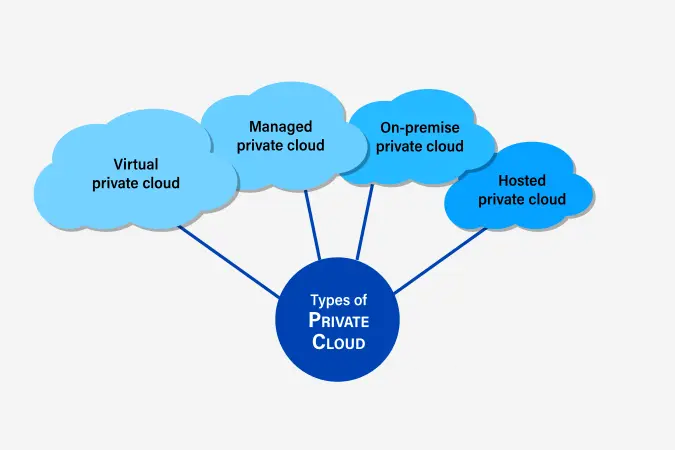
What Is Private Cloud IT Management?
As businesses move away from traditional MSPs, many encounter the term private cloud IT management — often without a clear explanation of what it actually means. Unlike public cloud services or legacy outsourcing models, private cloud IT management represents a fundamentally different approach to running and controlling IT infrastructure.
A Simple Definition (Without the Jargon)
At its core, private cloud IT management means:
Running your company’s cloud infrastructure in a dedicated environment that you control, while using automation, monitoring, and expert oversight to manage it efficiently.
Instead of sharing infrastructure with thousands of other companies or handing control entirely to an MSP, a private cloud gives your business its own isolated environment — designed around your workloads, security requirements, and growth plans.
This environment can be hosted:
· On dedicated hardware
· In a private data center
· Or in a logically isolated cloud environment
What matters most is ownership and control, not the physical location.
Ownership vs Outsourcing
The key difference between private cloud management and traditional MSP services is who owns the infrastructure decisions.
With an MSP:
· The provider chooses tools and configurations
· Changes require approval and tickets
· Visibility is limited
With private cloud infrastructure management:
· The business owns the architecture
· Systems are customized to real needs
· Changes are fast, transparent, and auditable
This doesn’t mean businesses must manage everything manually. Modern private cloud managed services combine ownership with automation, expert configuration, and ongoing optimization — without surrendering control.
How Private Cloud Infrastructure Management Works
A typical private cloud setup includes:
· Dedicated compute and storage for predictable performance
· Centralized monitoring for real-time visibility
· Automated backups and disaster recovery
· Built-in security controls (firewalls, access policies, encryption)
· Scalable architecture that grows with the business
Rather than reacting to problems, private cloud systems are designed to prevent issues through automation and observability.
IT Management Without MSP Dependency
One of the biggest advantages of private cloud IT management is the ability to operate without MSP lock-in.
Businesses gain:
· Freedom to switch providers
· Flexibility to build internal expertise
· Control over timelines and upgrades
· Clear accountability
This model supports a hybrid approach — where expert teams assist with design and optimization, but the business retains strategic control.
As a result, private cloud management is becoming the preferred choice for organizations seeking IT management without MSP limitations, especially those planning long-term growth or operating in regulated environments.
Private Cloud vs MSP: A 2025 Comparison
When businesses evaluate private cloud IT management versus traditional MSPs in 2025, the decision often comes down to one core question: Who should control the infrastructure that runs the business?
Below is a practical comparison of the two models based on what matters most to modern organizations.
1. Control and Ownership
Traditional MSPs
· Infrastructure decisions are provider-driven
· Changes require tickets and approvals
· Limited architectural visibility
Private Cloud IT Management
· Full control over infrastructure design
· Direct access to systems and configurations
· Faster decision-making without external bottlenecks
Control is no longer a luxury — it’s a requirement for businesses that rely on real-time data, automation, and AI-driven workflows.
2. Cost Structure and Predictability
Traditional MSPs
· Fixed monthly fees regardless of usage
· Hidden costs for “extra” services
· Scaling often increases costs disproportionately
Private Cloud Infrastructure Management
· Transparent resource-based pricing
· Costs tied to actual usage
· Easier optimization and forecasting
In 2025, businesses expect financial clarity. Private cloud managed services provide visibility into where every dollar is spent.
3. Security and Risk Management
Traditional MSPs
· Shared security tooling across clients
· Limited insight into incident response processes
· Generic compliance support
Private Cloud IT Management
· Dedicated security policies per organization
· Fine-grained access controls
· Compliance-ready configurations
As regulatory pressure increases, businesses prefer environments where security is designed, not inherited.
4. Scalability and Performance
Traditional MSPs
· Scaling requires contract changes
· Performance may fluctuate in shared environments
· Innovation often limited by provider capabilities
Private Cloud Infrastructure Management
· On-demand scalability
· Predictable performance
· Custom optimization for workloads
This flexibility is critical for businesses with seasonal demand, rapid growth, or AI-driven workloads.
5. Accountability and Alignment
Traditional MSPs
· Focus on SLA metrics
· Incentivized to maintain the status quo
Private Cloud IT Management
· Focus on system performance and business outcomes
· Easier alignment between IT and leadership goals
By 2025, the conversation shifts from “who responds fastest” to “who enables growth most effectively.”
Why Businesses Are Leaving MSPs in 2025
The transition away from traditional MSPs is not driven by a single issue. Instead, it’s the result of multiple pressures converging at once — technological, regulatory, and operational. In 2025, these pressures make private cloud IT management a more practical and strategic choice.
1. Data Sovereignty and Ownership Concerns
Businesses are increasingly aware of where their data lives and who has access to it. With MSPs, data is often stored across shared systems, third-party platforms, or regions that may not align with local regulations.
This raises concerns around:
· Data residency requirements
· Legal jurisdiction over sensitive data
· Limited control during audits or investigations
Private cloud infrastructure management gives organizations clear data ownership, making compliance and governance far easier to manage.
2. Rising Compliance Pressure
Industries such as healthcare, finance, legal services, and SaaS face stricter compliance standards every year. MSPs often provide generic compliance support that doesn’t fully align with industry-specific requirements.
With private cloud managed services:
· Compliance frameworks can be built into the infrastructure
· Access policies are enforced at the system level
· Audit trails are always available
This proactive approach reduces risk and simplifies regulatory reporting.
3. The Need for AI and Automation
Modern businesses depend on automation and AI-driven systems to remain competitive. However, many MSPs are slow to support custom AI workflows or advanced automation due to complexity or cost.
Private cloud IT management enables:
· Custom AI workloads
· Internal automation pipelines
· Faster experimentation and deployment
In 2025, IT infrastructure must support innovation — not limit it.
4. Demand for Internal Visibility
Leadership teams want insight into system performance, security posture, and cost trends. MSP dashboards often provide surface-level metrics, leaving decision-makers blind to deeper issues.
Private cloud management offers:
· Real-time monitoring
· Granular performance metrics
· Clear operational insights
This visibility empowers better planning and faster decision-making.
5. Strategic Independence
Finally, businesses are prioritizing independence. Relying entirely on a third-party MSP introduces long-term risk — especially as companies grow or change direction.
Private cloud IT management supports:
· Vendor flexibility
· Internal capability building
· Long-term scalability
This shift reflects the broader future of IT management in 2025 — one built around ownership, transparency, and adaptability.
Private Cloud for Small and Medium Businesses
For years, private cloud infrastructure was seen as something only large enterprises could afford or manage. In 2025, that assumption is no longer true. Advances in automation, virtualization, and cloud tooling have made private cloud IT management accessible — and practical — for small and medium-sized businesses (SMBs).
Private Cloud Is No Longer Enterprise-Only
Modern private cloud environments are modular and scalable. SMBs can start small and expand as their needs grow, without committing to massive upfront investments.
Key changes enabling this shift include:
· Lower-cost dedicated infrastructure
· Automation replacing manual administration
· Simplified deployment and monitoring tools
· Flexible pricing models
As a result, private cloud infrastructure management is no longer about size — it’s about strategy.
Cost-Effective Alternatives to MSPs
Many SMBs assume MSPs are cheaper because they offer a flat monthly fee. But when examined closely, MSP contracts often include services that businesses don’t fully use — while charging extra for anything custom.
Private cloud managed services allow SMBs to:
· Pay only for required resources
· Scale without renegotiating contracts
· Avoid hidden fees
Over time, this leads to better cost efficiency and more predictable IT spending.
Tailored Infrastructure for Growing Businesses
SMBs often outgrow MSP environments quickly. New tools, integrations, and workloads create friction in rigid MSP setups.
Private cloud IT management supports:
· Custom application stacks
· AI-powered tools and automation
· Flexible integration with SaaS platforms
This adaptability is critical for businesses planning to scale, launch new products, or expand into new markets.
Professional Management Without Losing Control
Choosing private cloud does not mean managing everything alone. Many providers offer expert oversight, security configuration, and performance optimization — without taking ownership away from the business.
This hybrid model gives SMBs:
· Professional-grade reliability
· Internal control and visibility
· Freedom from MSP dependency
In 2025, private cloud IT management has become a smart, scalable alternative for SMBs that want control without complexity.
Security, Compliance, and Control Advantages
One of the strongest reasons private cloud IT management is replacing traditional MSPs in 2025 is security. As cyber threats become more advanced and regulations more demanding, businesses are no longer comfortable relying on shared or opaque security models.
Private cloud environments are designed with control-first security, rather than add-on protection.
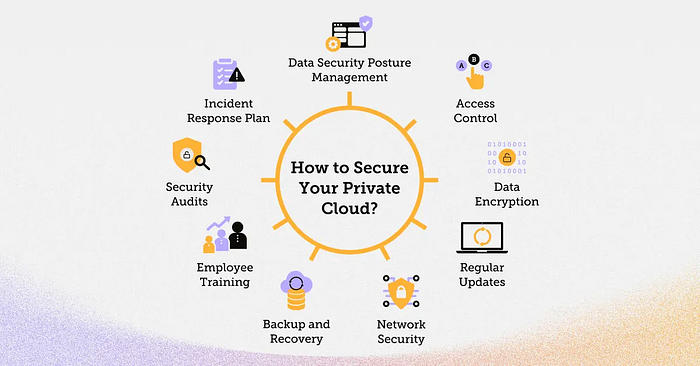
Built-In Security by Design
Traditional MSPs often apply the same security stack across multiple clients. While efficient for the provider, this creates shared risk and limited customization.
Private cloud infrastructure management allows businesses to:
· Define their own security architecture
· Enforce strict access controls
· Segment workloads to reduce attack surfaces
· Apply security policies at the infrastructure level
Security becomes proactive and structural, not reactive.
Stronger Access Control and Identity Management
In MSP environments, access is often granted broadly to support staff, creating unnecessary exposure.
With private cloud IT management:
· Role-based access is enforced
· Permissions are auditable
· Internal teams control who can see what
This level of control is especially important for businesses handling sensitive customer data or intellectual property.
Compliance-Ready Infrastructure
Regulatory requirements are no longer optional. Whether it’s data protection, financial reporting, or industry-specific regulations, businesses must be able to prove compliance — not just claim it.
Private cloud managed services make this easier by:
· Maintaining clear audit trails
· Supporting region-specific data residency
· Enforcing encryption and backup policies
Instead of adapting compliance to MSP limitations, businesses build compliance directly into their infrastructure.
Reduced Risk and Faster Response
When something goes wrong, speed and clarity matter.
Private cloud IT management provides:
· Immediate access to logs and system metrics
· Faster incident investigation
· Clear ownership of response actions
This reduces downtime, limits damage, and improves overall resilience.
In 2025, security is no longer about trust alone — it’s about verifiable control. Private cloud environments offer that control by default.
The Future of IT Management (2025 and Beyond)
The shift from traditional MSPs to private cloud IT management is not a temporary trend — it reflects a deeper transformation in how businesses think about technology. In 2025 and beyond, IT is no longer a background function. It is a strategic asset.
From Outsourced IT to Owned Infrastructure
For years, outsourcing IT was seen as a way to reduce complexity. Today, businesses realize that outsourcing control creates long-term risk.
The future of IT management emphasizes:
· Ownership over dependency
· Visibility over abstraction
· Flexibility over fixed contracts
Private cloud infrastructure management supports this evolution by giving businesses control without overwhelming complexity.
Automation-First Operations
Modern IT environments are increasingly automated. Monitoring, scaling, backups, and security policies are handled by systems — not manual processes.
Private cloud IT management enables:
· Automated infrastructure scaling
· Self-healing systems
· Predictive monitoring and alerts
This reduces human error and allows IT teams to focus on optimization rather than firefighting.
AI-Ready Infrastructure
As AI becomes embedded into everyday business operations, infrastructure must support high-performance workloads, data processing, and experimentation.
Private cloud environments are ideal for:
· AI model deployment
· Secure data handling
· Custom automation pipelines
Traditional MSP setups struggle to support these needs efficiently, making private cloud a natural choice for forward-looking organizations.
Strategic IT Alignment
The future of IT management is closely aligned with business strategy. Leaders want infrastructure that adapts as goals change — without renegotiating contracts or rebuilding systems.
Private cloud IT management offers:
· Long-term scalability
· Vendor independence
· Strategic flexibility
By 2025, this alignment is no longer optional — it’s expected.
Conclusion: Why Private Cloud IT Management Is the New Standard
By 2025, the limitations of traditional MSPs have become difficult to ignore. What once worked for on-premise systems and small, static environments no longer fits a world defined by cloud computing, automation, AI, and growing security demands.
Private cloud IT management represents a fundamental shift in how businesses approach IT — not as a service to outsource blindly, but as an asset to control strategically.
Across this article, we’ve seen why organizations are making this transition:
· Traditional MSPs rely on reactive, opaque models that limit flexibility
· Rising costs and vendor lock-in reduce long-term efficiency
· Security and compliance demands require infrastructure-level control
· Businesses need visibility, automation, and scalability to grow
Private cloud infrastructure management addresses these challenges by combining ownership with modern cloud capabilities. It gives companies the ability to scale confidently, secure sensitive data, adopt new technologies, and align IT operations with business goals — without the constraints of legacy MSP contracts.
For small and medium businesses as well as growing enterprises, this model is no longer a future consideration — it’s a present necessity.
As the future of IT management in 2025 continues to evolve, one thing is clear: organizations that invest in control, transparency, and automation will be better positioned to adapt, innovate, and compete.